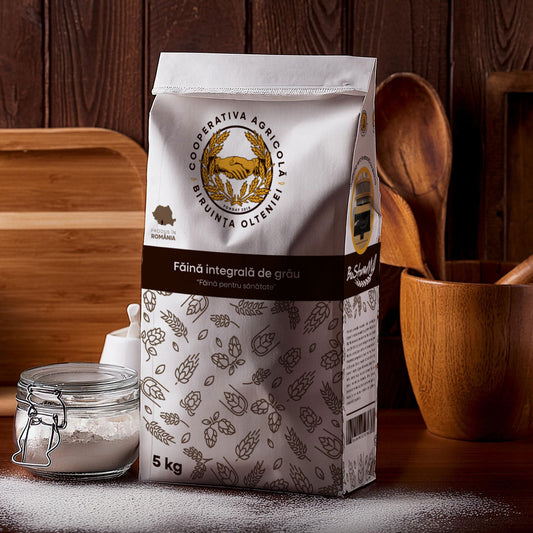
5 proven benefits of whole wheat flour
In recent years, whole wheat flour has become increasingly present in discussions about balanced nutrition. And for good reason: unlike refined white flour, whole flour preserves all three parts of the wheat grain — the bran, the germ, and the endosperm. Therefore, this is where the important differences in nutritional profile come from and, implicitly, some of its benefits.
Whole wheat flour has a clear nutritional advantage over refined white flour, due to the higher content of fiber, magnesium, phosphorus, potassium, zinc, manganese, and bioactive compounds located especially in the bran and germ.
There are scientific studies that have shown that whole wheat flour supports a higher fiber intake and is associated with a lower risk of type 2 diabetes and cardiovascular diseases. At the same time, some studies have highlighted favorable effects on body weight, but also on body inflammation. Clinical studies have shown that whole wheat flour can be beneficial for the microbiome and digestive health. Some research indicates an increase in bifidobacteria and lactobacilli or the maintenance of fecal butyrate.
What does whole wheat flour contain and how does it differ from refined white flour?
Whole flour preserves all three components of the grain — the bran, the germ, and the endosperm —, while refined flour is obtained by removing the bran and the germ. When flour is refined, certain B-complex vitamins and iron are added back, but fiber is not.
This means that whole flour provides nearly 4 times more fiber and about 6 times more magnesium than industrial white flour. Furthermore, it offers a higher intake of phosphorus, potassium, zinc, manganese, choline, and carotenoids.
The bran contains most of the phenolic acids in wheat, especially ferulic acid, but also p-coumaric and sinapic acids.
What are the concrete benefits of whole wheat flour?
1. Whole flour has a richer content of fiber, vitamins, and minerals
The first advantage of whole wheat flour is that it preserves the nutritional components of the whole grain. The bran is rich in fiber, and the germ and the other layers of the grain bring B-group vitamins, iron, zinc, magnesium, antioxidants, and phytochemicals. In contrast, refining removes a significant part of these elements.
For this reason, whole flour does not just mean "less processed", but also a choice with better nutritional density. When you use whole wheat flour instead of white flour, you don't just change the texture of a product, but also its nutritional quality. If you are looking for an additive-free, premium quality flour, whole flour is the most suitable choice.
2. Whole flour can support digestion and microbiome health
One of the most well-known benefits of whole wheat flour is related to digestion. The fiber in the bran aids intestinal transit and contributes to better digestion. Whole grains support healthy digestion, and this is closely linked to the higher fiber intake compared to refined products.
In addition, there is data showing that whole-grain foods can favorably influence the intestinal microbiota. In short, whole wheat flour can offer the body more than just fiber: it can also provide useful food for beneficial intestinal bacteria.
3. Does whole wheat flour have a better impact on blood sugar than refined white flour?
Another strong argument in favor of whole wheat flour is related to how the body manages glucose. The consumption of whole grains, compared to refined grains, is associated with a more favorable glycemic response, and some analyses have also shown beneficial effects on glucose metabolism in people with diabetes.
Furthermore, a higher consumption of whole grains is associated with a lower risk of type 2 diabetes. When it replaces white flour in bread, flatbreads, pancakes, pizza, or other frequently consumed dishes, it can contribute to a better metabolic profile.
4. Whole wheat flour can contribute to cardiovascular health
Whole grains are consistently associated with a lower risk of cardiovascular disease. They can reduce the risk of heart disease and stroke, and large analyses published in the scientific literature have found inverse associations between whole grain consumption and the risk of coronary heart disease, cardiovascular disease, and cardiovascular mortality.
One of the plausible reasons is the combination of fiber, phytonutrients, and the better nutritional profile of whole grains. Harvard notes that choosing whole grains instead of refined ones is associated with better levels of total cholesterol, LDL, triglycerides, and insulin. In other words, whole wheat flour is not just a rustic alternative to white flour, but an option that aligns better with recommendations for cardiovascular protection.
5. Whole wheat flour can help with satiety, weight control, and reducing low-grade inflammation
The fiber in whole grains can contribute to a better feeling of satiety. A review of whole-grain products concluded that they can increase satiety and reduce the feeling of hunger, even if the effect on energy consumption at the next meal is not always identical across all studies.
Therefore, whole wheat flour can also be a suitable choice for people aiming for a more balanced lifestyle, not just for those strictly interested in digestion.
How can you use whole wheat flour more often? In what dishes can I use whole wheat flour?
In practice, the benefits appear especially when whole wheat flour replaces part or all of the white flour in foods you consume frequently: bread, flatbreads, pancakes, muffins, pizza, or homemade pasta. The idea is not that whole flour alone solves the consumption of unhealthy foods, but that it is a better choice compared to white flour in the context of a balanced diet, based on more minimally processed foods and fewer refined grains. This is also the direction recommended by nutritionists.