Whole bran: good for digestion and surprisingly easy to use in everyday cooking.
Whole bran is by no means a new ingredient, it's just that many people have forgotten about it, because there are enough temptations in this world that it would be impossible not to. But it's a shame, because they are filling, easy to slip into everyday food, and can really bring a good plus to your diet.
No, you don't have to make who knows what complicated recipes, nor suddenly start healthy menus. Bran is naturally used in things you are already preparing anyway: in yogurt, in porridge, in homemade biscuits, in meatballs, in doughs. The secret is to use them with moderation and a bit of culinary common sense, so they are good, not just healthy. Plus, if you keep a balance, they can even be wow.
What is whole bran?
Bran is the outer part of the cereal grain, meaning precisely that layer that is often removed when very white and very fine flours are obtained (those ultra-processed ones). In this part, fibers are found in abundance, but also other valuable nutrients.
Plainly speaking: they are that more rustic, rougher, less attractive part of the grains. They don't look spectacular, but they do a good job for the body, for weight management, and especially in beauty treatments.
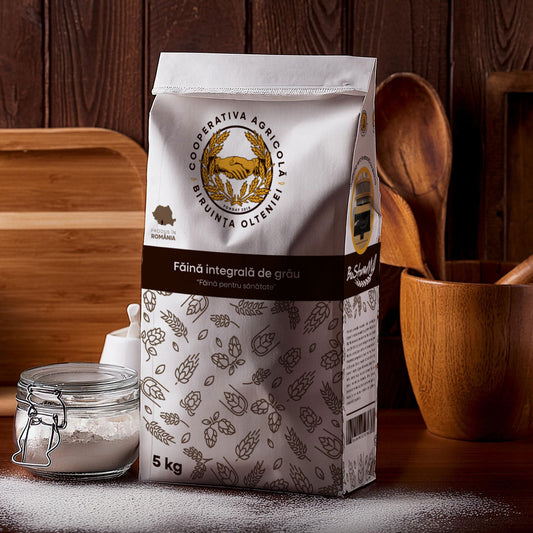
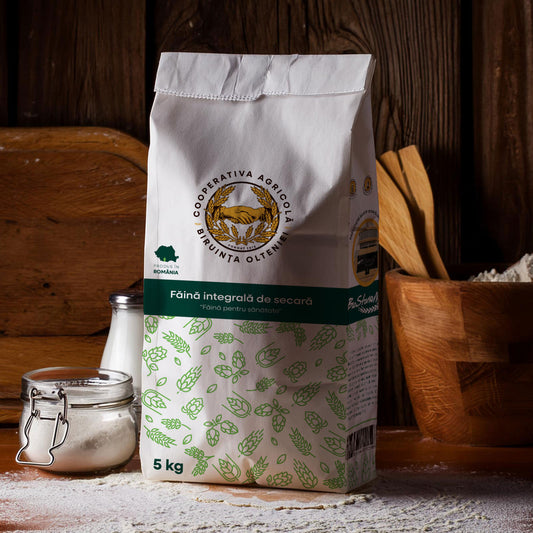
The most well-known type of bran is wheat bran, but you can also find oat variants or rye bran. We have whole wheat bran and whole rye bran. In the home kitchen, wheat bran is the most used, especially because it is accessible and goes well in many combinations; however, for many, whole rye bran is a true revelation. So our sincere recommendation is to try the rye bran as well and tell us what you think.
What health benefits does whole bran have?
The first thing everyone thinks of is digestion. And for good reason. Being rich in fiber, bran can aid intestinal transit and contribute to preventing constipation. It doesn't work miracles overnight, but integrated consistently into the diet, it can help a lot.
Then, bran provides satiety. In other words, the meal keeps hunger away better and you don't wake up after an hour rummaging through the cupboard for something to snack on. For anyone who wants more balanced meals, this is a very good advantage.
There is also the less visible, but important part: a diet rich in fiber is generally associated with better eating habits. When you focus on whole grains, vegetables, fruits, and ingredients as natural as possible, the entire menu changes for the better.
Of course, bran is not a miracle ingredient nor some universal cure. It is just one of those ordinary ingredients that, used consistently, can do good.
How do we use wheat bran correctly?
Generally, when people find out about a healthy ingredient that suits them, they get excited and force it into their diet. For example, I have transit problems and find out that whole wheat bran is beneficial for those with these issues; obviously, in an attempt to solve my problem, I will tend to put it in almost all foods, but it's not the best idea. We don't want to make you buy more, but we want to help you have a balance in the choices you make.
Bran is introduced gradually. You start with a teaspoon or one to two tablespoons a day, depending on how you tolerate them and the rest of your diet. In addition, if you increase your fiber intake, you must also drink enough liquids.
In terms of taste, they are not bad, but they are not as delicate as white flour, although, between you and me, our whole wheat bran and whole rye bran actually have a fine texture, not so rustic as to scratch your throat. They go very well in preparations such as: porridges, biscuits, meatballs, thick yogurts, doughs with personality.
In which simple dishes do they work best?
1. In yogurt or kefir
Here is the simplest and most convenient option. You put the yogurt in a bowl, add a tablespoon of bran, a little grated apple or a few fruits, and that's it. If you also add a tablespoon of oat flakes, you have a very honest breakfast. I also add fresh raspberries, and frozen raspberries in the off-season, and this mixture is super aromatic, not just tasty.
2. In oatmeal porridge
A tablespoon of bran added at the end makes the porridge more consistent and filling. You shouldn't overdo it, because otherwise you risk getting a composition that is too dense and somewhat dry.
3. In homemade biscuits and muffins
Here, bran is very suitable because it gives texture and goes well with banana, apples, cinnamon, weaknesses, raisins. In simple homemade sweets, they feel natural and don't seem forced at all.
4. In meatballs or savory mixtures
You can replace a portion of the breadcrumbs with bran. I know, not many know this, but I've tested it and they taste great and different. They absorb moisture and help the mixture bind together. They work very well in zucchini patties, vegetable patties, or even in some versions of meatballs or meat patties.
5. In rustic doughs
If you make homemade bread, flatbreads, or traditional griddle cakes (turte), you can put a little bran in the dough. Not much, because we don't want something heavy and dry to come out, but just enough to give the dough a little character.
Below I also leave you a few simple recipes with whole bran.
Yogurt with bran, apple, and cinnamon
This is that 2-minute recipe, good for hurried mornings. My 2-year-and-6-month-old little girl loves this combination, and to avoid the risk of her getting bored with this recipe, you can replace the apple with other fruits, but in similar quantities.
Ingredients:
200 g plain yogurt
1 small apple, grated or diced
1 tablespoon whole bran
1 tablespoon oat flakes
1 teaspoon honey
a little cinnamon
Preparation method:
Put the yogurt in a bowl. Add the apple, bran, oat flakes, and cinnamon. Drizzle a little honey on top. Mix and let it sit for 5 minutes, so the bran hydrates a little. It's simple, good, and keeps hunger away very well.
Warm porridge with banana and bran
A warm, healthy breakfast that is very easy to prepare.
Ingredients:
250 ml milk
4 tablespoons oat flakes
1 tablespoon whole bran
1 banana
cinnamon
1 teaspoon ground flaxseeds, optional
Preparation method:
Boil the oat flakes in milk for 3-4 minutes over low heat. Once the porridge has thickened, take it off the heat and add the bran. Add the sliced banana, a little cinnamon, and, if you want, the flaxseeds. The bran is added at the end to keep a more pleasant texture.
Soft biscuits with banana, oats, and bran
The kind of homemade biscuits, not fancy, but tasty, healthy, and filling, exceptionally suitable for coffee or tea.
Ingredients:
2 well-ripened bananas
120 g oat flakes
2 tablespoons whole bran
1 tablespoon raisins or cranberries
1 tablespoon chopped walnuts
1/2 teaspoon cinnamon
Preparation method:
Mash the bananas well with a fork. Add the oat flakes, bran, raisins, walnuts, and cinnamon. Mix everything together and spoon heaps onto a baking tray lined with parchment paper. Bake at 180 degrees Celsius for 15-18 minutes. They turn out soft, slightly browned at the edges, and very pleasant.
Zucchini patties with bran
Here, the bran really does its job very well.
Ingredients:
2 medium zucchinis
2 eggs
100 g grated cheese
2-3 tablespoons whole bran
2 tablespoons flour
2 cloves of garlic
dill or parsley
salt and pepper
a little oil
Preparation method:
Grate the zucchinis and sprinkle with a little salt. After 10 minutes, squeeze them very well. Then mix with the eggs, cheese, flour, herbs, garlic, and bran. Let the mixture sit for a few minutes, then shape into small patties. Bake on a tray at 200 degrees Celsius until beautifully browned. The bran helps absorb moisture and binds the mixture well.
How do you choose good bran?
Look for a simple product, without unnecessary additions and without flavors. At Biruința Olteniei we have whole bran, and the grains have been slowly stone-milled. The grain varieties we use are old Romanian varieties, so you have every reason to test the bran produced by us. The shorter the ingredient list, the better. Bran must be stored in a cool, dry place, and if you buy it in larger quantities, it's best to keep it in a well-closed container. You can find whole wheat bran and whole rye bran with us.
It doesn't hurt to smell them before use. If they have caught an old, rancid, or stale smell, do not use them anymore.
P.S. 1. For those with newborns, clean whole bran from secure sources is recommended to be chosen for the little ones' baths.
P.S. 2. For a healthy and luminous complexion, there are a series of masks you can prepare with whole wheat bran.
How do you use whole bran? Write your recipes in the comments!